Understanding the Fundamental Shift in Modern Bathroom Design
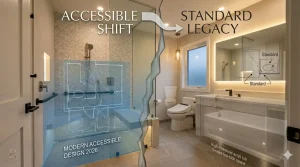
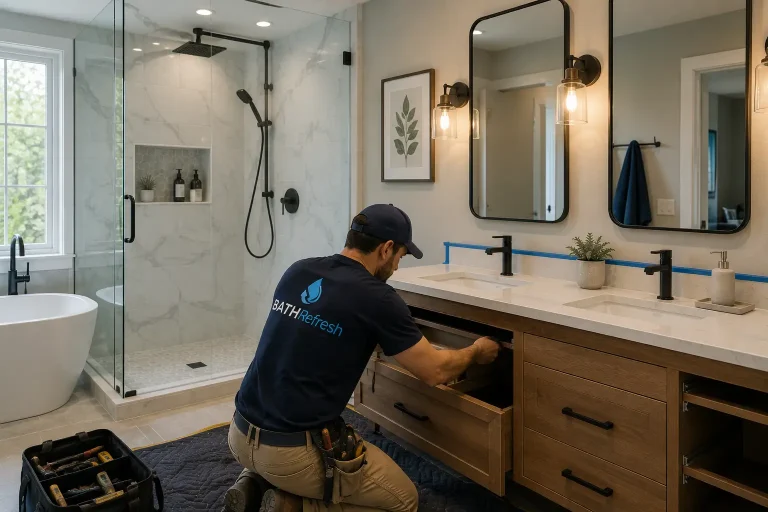
When you decide to update your home in 2026, the first question isn’t just about color palettes or tile shapes, it’s about how that space serves your future self. A standard renovation focuses primarily on aesthetic upgrades and modernizing old fixtures to increase property value and daily comfort.
An Accessible Bathroom Remodel is a specialized architectural shift designed to remove barriers, ensuring that every person, regardless of mobility levels, can use the space safely. While a standard remodel might prioritize a deep soaking tub, an accessible project prioritizes barrier-free entry and ergonomic safety.
At BathRefresh LLC, we see these two paths crossing more often than ever, as homeowners realize that “accessible” no longer means “hospital-like.” Modern universal design allows us to create stunning, high-end environments that just happen to be incredibly safe and functional for everyone from toddlers to seniors.
The Core Differences in Spatial Planning and Layout
In a standard remodel, the layout usually stays within the existing footprint to save on plumbing costs. We replace the vanity, swap the toilet, and maybe retile the shower. The goal is beauty and efficiency within a confined space.
Accessible renovations require a deeper look at spatial clearance. We follow ADA (Americans with Disabilities Act) guidelines to ensure there is enough “turning radius” for a wheelchair or walker. This often means relocating walls or choosing smaller, more efficient vanities to clear the floor.
Standard: Maximizes storage and counter space.
Accessible: Maximizes floor clearance and maneuverability.
Wet Area Transformations: Tub-to-Shower Conversions
The most significant physical change happens in the “wet area.” In a traditional American home, the standard setup is a 30-inch alcove tub with a shower curtain. For a standard remodel, we might replace this with a modern soaking tub or a framed glass shower.
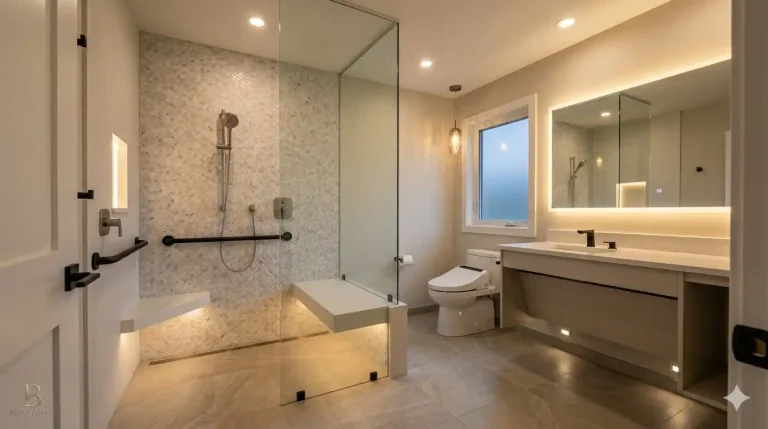
However, in an Accessible Bathroom Remodel, we typically perform a walk-in shower conversion. We remove the high tub wall, which is a major trip hazard, and install a curbless shower base. This creates a seamless transition from the bathroom floor into the shower area, allowing for effortless entry.
Comparing Shower and Tub Features
| Feature | Standard Remodel | Accessible Remodel |
| Entry Point | 14-18 inch tub wall or 4 inch shower curb | Zero-entry (curbless) or low-profile threshold |
| Safety Gear | Minimal (perhaps one decorative bar) | Reinforced grab bars and integrated seating |
| Controls | Fixed showerhead, standard mixing valve | Handheld shower w/ slide bar, thermostatic valves |
| Flooring | Large format tile (often slippery) | Slip-resistant, small-mosaic or textured surfaces |
Why the Threshold Matters for Safety and Longevity
In 2026, the trend of “aging in place” has moved from a niche requirement to a standard home improvement goal. When we talk about what “actually changes,” we are talking about the threshold. A standard remodel keeps the obstacles; an accessible one deletes them.
By choosing an accessible bathroom remodel in Nashua, NH, homeowners are investing in a space that won’t require another renovation if their mobility needs change five or ten years down the road. We focus on waterproofing integrity during these conversions, ensuring the entire bathroom floor acts as a “wet room” to prevent slips and water damage.
Flooring Materials and Slip Resistance Standards
The science of flooring has evolved rapidly. In a standard remodel, people often pick polished marble or large porcelain tiles because they look luxurious. Unfortunately, when wet, these become ice rinks.
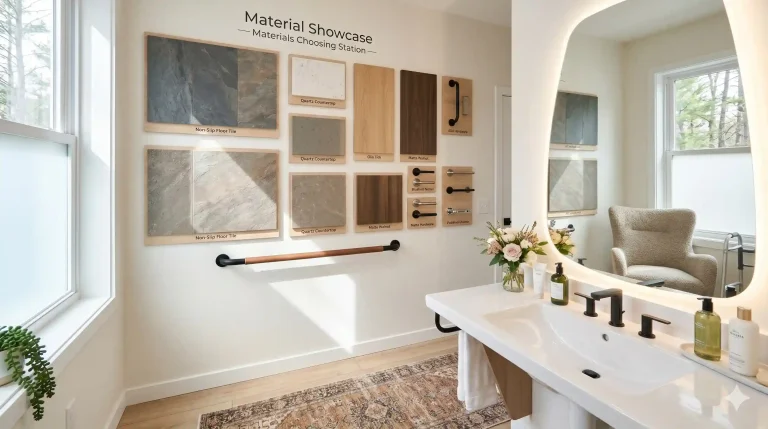
In an accessible bathroom remodel in Manchester, NH, we prioritize the Coefficient of Friction (COF). We utilize textured porcelain or specialized luxury vinyl that provides “grip” even when soapy water is present. This is a crucial change that saves thousands of lives from fall-related injuries every year.
Standard Choice: Polished 12×24 tiles with wide grout lines.
Accessible Choice: Non-slip mosaic tiles or matte-finish stone-look composites.
Vanity Heights and Ergonomic Hardware
Have you ever considered how much you bend over to wash your hands? A standard vanity is usually 32 to 36 inches high with cabinets underneath. For an accessible space, we often install wall-hung vanities or “floating” sinks.
This change allows a person using a wheelchair to roll directly under the sink. We also swap traditional twist-knob faucets for lever-style handles or touchless sensors. These are easier for people with arthritis or limited grip strength, making the daily routine far less taxing on the joints.
Lighting and Visibility Enhancements
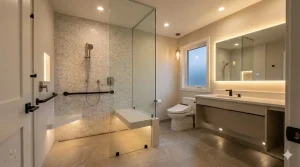
Standard remodels usually feature a single overhead light and perhaps a vanity bar. This often leaves shadows in the shower or around the toilet. In a high-quality accessible bathroom remodel in Merrimack, NH, we implement layered lighting.
We add LED recessed lighting inside the shower, motion-activated floor lights for nighttime safety, and backlit mirrors. Better visibility isn’t just a luxury; it prevents missteps and helps those with declining vision navigate the room without anxiety.
Hardware and Grab Bar Integration
Many people fear that adding grab bars will make their home look like a nursing home. In a standard remodel, these are often skipped entirely. However, in 2026, designer grab bars have changed the game.
We now install heavy-duty bars that double as towel racks or toilet paper holders. They come in matte black, brushed gold, and polished chrome. The “change” here is the structural reinforcement behind the walls. We install “blocking” (extra wood support) so these bars can support 250+ pounds instantly, something a standard remodel doesn’t usually include.
The Role of Smart Technology in 2026 Bathrooms
Technology is the bridge between luxury and accessibility. While a standard remodel might include a Bluetooth speaker, an accessible bathroom remodel in Bedford, NH might feature:
Smart Toilets: With bidet functions and heated seats, reducing the need for manual dexterity.
Voice-Activated Showers: Allowing users to set the temperature before even stepping inside.
Leak Detection Sensors: Providing peace of mind for those who might not notice a small drip immediately.
Regulatory and Permit Requirements
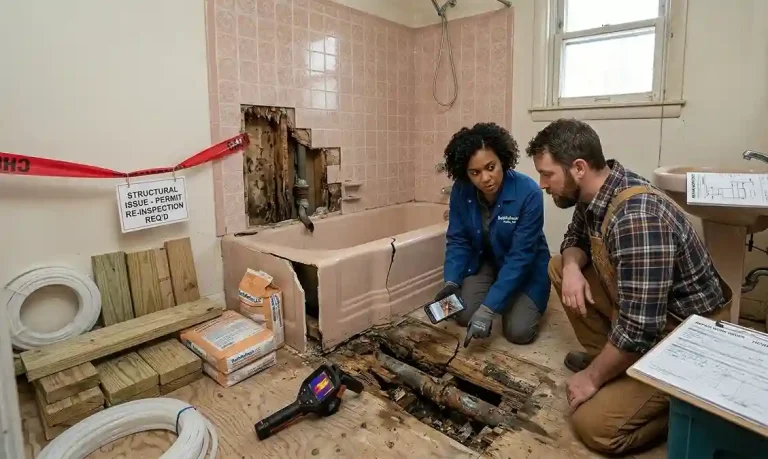
Standard renovations are straightforward in terms of permitting. However, when we perform an accessible bathroom remodel in Hudson, NH, we must ensure the project complies with local building codes that might have specific requirements for door widths (usually 32 to 36 inches) and plumbing clearances.
Our team at BathRefresh LLC handles these complexities so the homeowner doesn’t have to worry about the legal technicalities of universal design. We make sure the transition is smooth, from the initial architectural drawings to the final inspection.
Maintaining the Aesthetics While Boosting Function
One of the biggest misconceptions is that you have to choose between a “pretty” bathroom and a “safe” one. That is no longer the case. When we execute an accessible bathroom remodel in Hollis, NH, we use the same high-end quartz, custom cabinetry, and designer tiles found in luxury hotels.
The “change” is subtle to the eye but massive in the experience. It’s about the curbless transition, the wider doorway, and the strategic placement of controls. It is a “smart” design that anticipates the needs of the user without shouting “medical facility.”
Why Local Expertise Matters for Your Project
Every town has its own quirks. When we work on an accessible bathroom remodel in Pelham, NH, we understand the specific home styles found in the area, from historic farmhouses to modern builds. This local knowledge allows us to anticipate structural challenges before we even tear out the first tile.
Similarly, an accessible bathroom remodel in Salem, NH requires a contractor who knows the local supply chains and can source the specific slip-resistant materials needed for a high-quality finish. We pride ourselves on being a trusted local partner for these life-changing renovations.
Final Thoughts on Your Remodeling Journey
Whether you are looking for a standard aesthetic refresh or a full-scale accessibility overhaul, the goal is the same: a bathroom that makes you feel relaxed and safe. By choosing the accessible route, you aren’t just fixing a room; you are future-proofing your lifestyle and ensuring your home remains a sanctuary for decades to come.
If you’re ready to see how these changes can work in your specific floor plan, our team is standing by to help. We combine craftsmanship with deep empathy for our clients’ needs, ensuring every tile and fixture serves a purpose.
Ready to Transform Your Bathroom?
Don’t wait for a slip or a fall to make your home safer. Let’s design a space that looks incredible and works for everyone in your family.
Contact BathRefresh LLC today to schedule your consultation. We serve homeowners across New Hampshire and Massachusetts with expert craftsmanship and dedicated service.
Call us directly at: (833) 308-3323
Our Local Service Areas and Specialized Solutions
At BathRefresh LLC, we believe every homeowner deserves a bathroom that combines safety with style. We provide dedicated project management and expert installation across several local communities. If you are looking for a trusted partner to guide you through the process of creating a barrier-free environment, explore our localized services below: